The currency of the universe is energy. We use it to power our homes, grow our food, use our laptops and many more. We can get this energy from many sources such as fossil fuels, splitting atoms, bombarding photovoltaic cells with protons but all of these have problems. Fossil fuels are toxic, Nuclear waste is… well nuclear waste, and with solar, we don’t have enough batteries for a cloudy day but the Sun is partying with energy. Is there a way we could have a star on Earth? Can we bottle a star? Let’s start reading!
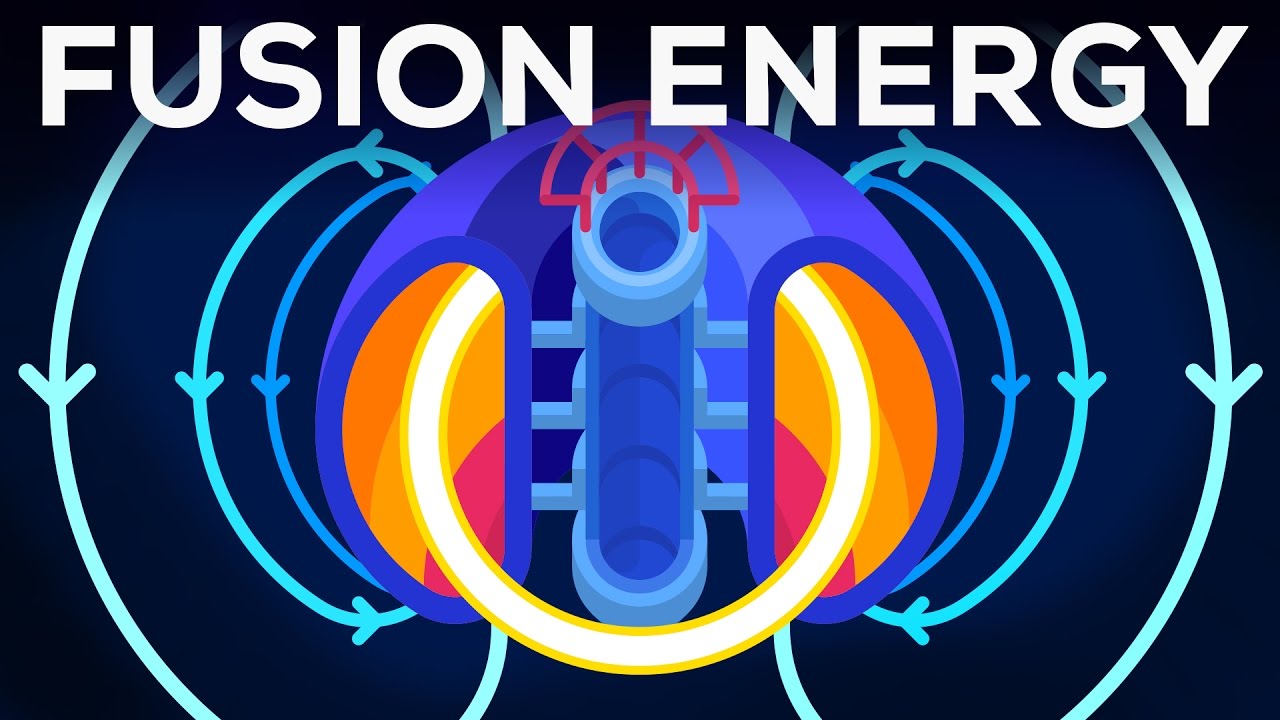
The sun shines because of nuclear fusion, if I simplify, fusion is a thermonuclear process. Meaning that the ingredients have to be astonishingly hot. The ingredients are so hot that atoms are stripped from their electrons, making a plasma where nuclei and electrons bounce around freely. Since nuclei are positively charged, they repel each other. To overcome this repulsion, the particles have to be going very fast. In this context, very fast means very hot, Millions of degrees celsius. Stars cheat to create this temperature. They’re so massive that the pressure in their cores generates the heat to squeeze nuclei together until they merge and fuse, creating heavier and releasing energy in the process. This is the energy that scientists hope to harness, in a new generation of power plant; The Fusion Reactor. On Earth, it is not feasible to create to use this brute force method to create fusion. We have to get clever. To date, scientists have created 2 ways to make plasmas hot enough to fuse. The first one uses a magnetic field to squeeze plasma into a doughnut-shaped chamber, the reaction takes place here. These Magnetic Confinement Reactors such as the I.T.E.R in France, use superconducting electromagnets cooled with liquid helium to a few degrees of absolute zero. Meaning that they host some of the biggest temperature gradients in the known universe.
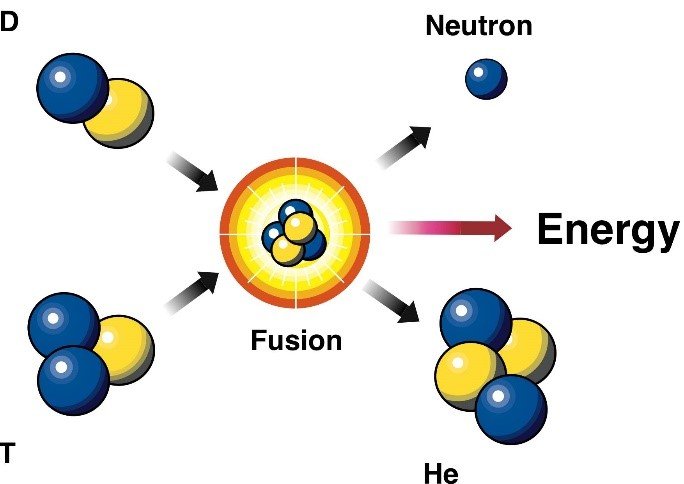
The second type Inertial Confinement and it uses pulses from superpowered lasers to heat the surface of a pellet of fuel, imploding it and briefly making it hot and dense enough to fuse. In fact, one of the most powerful lasers in the world is used for fusion experiments at the National Ignition Facility in the US. These experiments and others around the world are only experiments. Scientists are still developing the technology and although they can achieve fusion, they use more energy than what they produce in fusion. The technology has a long way to go before it’s commercially viable and it may never be. If it gets there, it will be so efficient that a single cup of seawater can be used to produce as much energy as burning a barrel of oil and with no waste too. This is because fusion reactors would use Hydrogen or Helium as fuel and seawater is loaded with Hydrogen but not any Hydrogen will work. Specific isotopes with extra neutrons called Deuterium and Tritium are needed to make the right reactions. Deuterium is stable and can be found in abundance in seawater. Tritium is a bit trickier, it’s radioactive and there may only be 20 kg of it in the entire world, mostly in nuclear warheads. This makes it rare and expensive. So we need another fusion buddy for Deuterium instead of Tritium. Helium-3, An Isotope of Helium, might be a substitute but it’s also really rare on Earth but here, the Moon might have the answer. Over billions of years, the solar wind may have built up huge deposits of Helium-3 on the Moon. Instead of making Helium-3, we could mine it. If we could lift the lunar dust off the Moon, we could have enough fuel to power the entire Earth for thousands of years. One more argument for building a moon-base if you weren’t already convinced. We can think about building a mini-sun, that sounds really dangerous but it would be much safer than other types of powerplants. This is because fusion reactors are not like nuclear powerplants because they aren’t a bomb. The main drawback of this technology is that it is unproven so it’s a 10 billion dollar gamble. That money could be spent on other clean energy sources that are proven.
 TechRead
Imagine how advanced we’ll become after fusion energy becomes commercial. But still it’s a gamble just like you said
LikeLike
It definitely is a gamble, and thanks for the comment!
LikeLike