Out of all of the species that have lived on the earth, most have gone extinct. At some point, this fate will come to humanity, it may take thousands of centuries, it may take many eons but extinction is inevitable. The future is certainly uncertain but extinction is not.
Threats From Space
Around 8,000,000 years ago, a kilometre wide asteroid collided with earth. The crater has not been located yet.
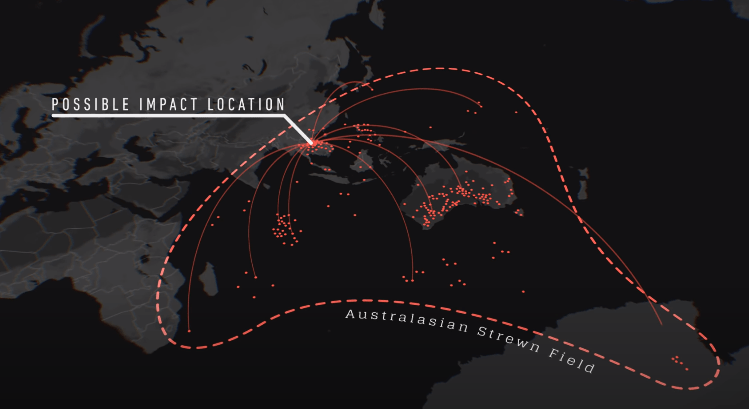
The fragments have been found around the entire eastern hemisphere, an expansive Strewn Field covers up to 30% of the earth. Our ancestors were alive and witnessed this, they survived.
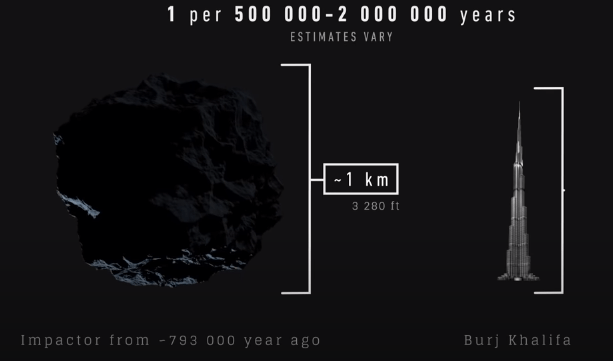
Such 1 kilometre long asteroids impact Earth around every half a million to two million years but these are estimates.
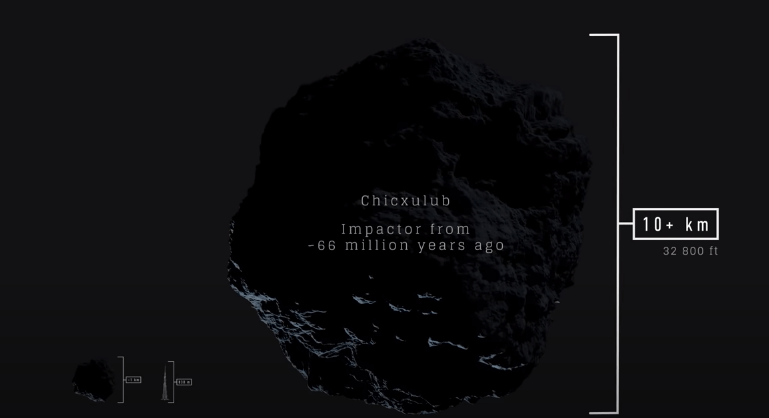
The one that wiped out the dinosaurs was much more destructive. The estimates are that such asteroids come every 100 million years but that’s a rough estimate. Whether such a huge impact is survivable is a debate. The kinetic energy of such an impact would be equivalent to the detonation of billions of atomic bombs. Those who survive the initial blast would be subjected to unrelenting earthquakes, firestorms, and tsunamis. A thick layer of smoke and dust would quickly block out the sun. It will cause an impact winter that could last months or even years. Darkness, freezing cold, and global famine would cause world chaos. Despite this, survival is not unthinkable. Some may start to live underground, they would have a chance to make rebuild civilization. The survivability of such an impact depends on how much time we have to prepare. More than 90% of the asteroids and comets 1 kilometre or larger have been detected and if one of them was on a collision course with the earth, we would know decades or even centuries in advance, but this was not always the case. In 1983, a 9-kilometre wide asteroid was spotted only 2 weeks before its closest approach, if it was aiming for us, we would have two weeks of preparation. Things have improved since 1983, but space is impossibly vast. On 24th July 2019, an asteroid capable of destroying a city was spotted a day before it flew 5 times closer to the earth than the moon. While the odds of an extinction-level impact are low, it is not impossible. There are something called Damocloids, Damocloids are typified by their highly eccentric orbits and low reflectivity. Meaning, they are extremely difficult to detect, we’re currently tracking about 200 but there could many more… waiting to pay us a visit. Damocloids are on average 16 kilometres wide, which’s 6 kilometres bigger than the asteroids that nearly wiped out the dinosaurs. If one of these Damocloids were on a collision course with the earth, we would likely have no warning.
We massive stars die, they explode.
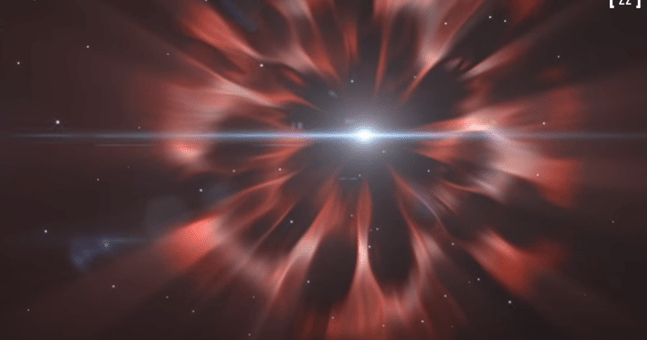
If a star went supernova within 30 light-years of Earth, it would cause concern.
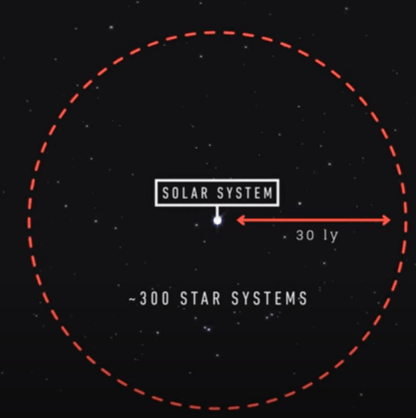
Thankfully, 90% of all the stars inside this bubble have been discovered and none of them are planning to explode anytime soon, but some supernova can pose threat from thousands of light-years away.
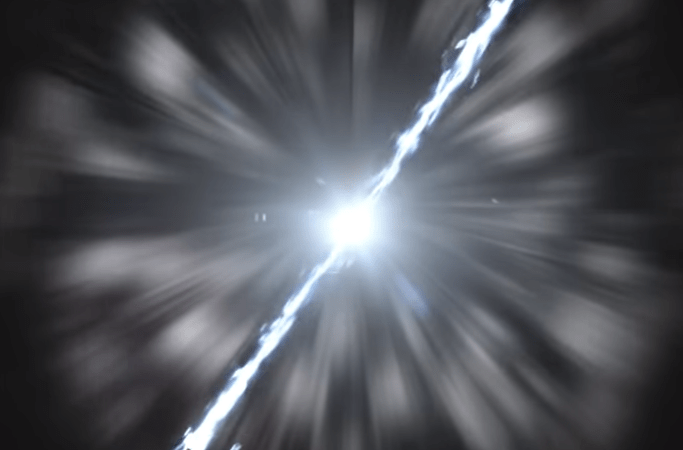
It’s a gamma-ray burst. It’s produced by only the most violent explosions in the universe. Instead of a spherical blast, it will channel the explosion into two highly-concentrated beams. A gamma-ray burst can radiate more energy in a few seconds… than the Sun will in its entire lifetime. The consequences of a gamma-ray burst are poorly understood, but we know that the atmosphere will absorb most of the radiation. This may destroy the ozone layer of the earth, which will let the harmful radiation of the Sun to penetrate to the surface of the earth. Some chemical reactions may take place and darken the sky, a Cosmic Winter. This winter would last for many years and would kill many plants and animals. Humanity can survive through the sun’s ultraviolet rays, but living in a mass extension would definitely not be pleasant. Some authors have written about a bleaker earth with one hemisphere of the earth destroyed by intense radiation, but these have been contested in recent years. Recent research shows that the removal of the ozone layer will be the primary threat. A gamma-ray burst is improbable. All of the gamma-ray burst we know of have been extragalactic in origin. They were too far away to be concerned about. There are a few stars in the universe that may explode into a gamma-ray, none of them are directed towards the earth. An impact from an asteroid and stellar explosions are only the cosmic threats that are foreseeable. Other events are either too improbable or won’t happen for millions of years by then we would have made a way to prevent those.
Terrestrial Threats
Around 74,000 years ago, a volcano erupted in Indonesia. It is the most powerful volcanic eruption in human history. For up to 2 weeks, the volcano emitted huge amounts of ash and dust, enough to block the sun and cool down the planet, Volcanic Winter, but there is not a lot about its effects on humanity. Research shows that the impacts were minimal. This is good for us because this means that there is little to threat from super volcanic eruptions to human extinction. There is something called a flood-basalt event, the largest one occurred 250 million years ago. A huge outpouring of molten rock covered a large area of Siberia, it was the size of Europe. It was the biggest mass extinction in history. The good news is that flood basalt events are not only rare but they are slow as well. Instead of a single eruption, it is a series of explosions that take place over many years. If one occurred tomorrow, it would be slow enough for us to survive.
Throughout the history of humanity, pandemics have caused a lot of deaths, one of the worst ones was the black death, it killed more than 60% of the population of Europe. The total death count is unknown. These pandemics never came close to extinction. A pathogen that can kill all the species that it infects is hard to imagine. A pathogen which passes through multiple species can be very dangerous.
The HN51 Avian Influenza also known as bird flu, is one such virus. It can currently spread among birds and humans but it can’t sustainably spread among humans but it can mutate to spread across humans. If it mutates to spread to humans sustainably then it could be the worst pandemic ever with a fatality rate of up to 60% but the more possible range is 12% to 31%. Still, this does not come close to extinction. Even in the worst-case scenario, most of humanity would survive. Pandemics are complicated and I can’t explain them in a post, nature is unlikely to be the thing that will make humanity extinct.
The biggest, most powerful, worst, threat to humanity is and continues to be… humanity
Unnatural Pandemics
Biotechnology has advanced to such a point that we can create deadly viruses in a lab. We can use this technology to greatly improve our understanding of viruses but accidental breaches of viruses have taken place in the past and could take place in the future. These have not always been made for science. These engineered microbes are concerning because they can be made much more powerful than natural ones. They can be made deadlier, more transmissible, and less treatable. Bioengineering technology is improving at a rapid rate and it is becoming easier to create a deadly virus. A small group of evil people could create a virus that can wipe out humanity
Artificial Intelligence
AI is getting more intelligent day by day and a simple loophole in the code of a robot could make it do things that it should have never done, if the mistake is big enough and the robot is mass-produced… our own invention can eradicate us
An AI which can upgrade itself would be able to surpass the intelligence of us humans and those robots could treat us badly just like we do to species that are less intelligent than us (Become Vegetarian people!). Many people say that this is unlikely but it is definitely not impossible.
My Thoughts
I think that like all species that have ever lived, we will go extinct but for now there is a long time before that happens so we should keep inventing.
Make sure to share and like this post and don’t forget to follow our website.
 TechRead
One thought on “Will We Ever Go Extinct?”